Trust is the invisible thread that holds relationships together. You may not always see it, but you feel its presence in emotional safety, honest conversations, and mutual respect. When trust weakens, even love can start to feel uncertain.
Trust issues are more common than many couples admit. Past heartbreaks, broken promises, emotional neglect, or unresolved trauma can quietly shape how we connect with others. The good news? Trust is not fixed. It can be rebuilt, strengthened, and protected with conscious effort.
In this in-depth guide, we’ll explore the real causes of trust issues, how to recognize the signs early, and practical solutions to rebuild confidence in your relationship-step by step.
Why Trust Matters in Relationships
Trust is not just about believing your partner won’t cheat. It’s about feeling emotionally safe, respected, heard, and valued. Without trust:
- Conversations become guarded
- Affection feels forced
- Small misunderstandings turn into major conflicts
A healthy relationship doesn’t require perfection-but it does require honesty and emotional security. At Heart Talks Today, we believe that trust is a skill that can be learned, strengthened, and renewed over time.
What Are Trust Issues?
Trust issues refer to persistent doubts, fears, or suspicions about your partner’s intentions or behavior-even when there’s no clear evidence of wrongdoing.
They can appear as:
- Fear of abandonment
- Difficulty believing compliments or promises
- Expecting betrayal
- Struggling to depend on others
Trust issues can exist in new relationships or long-term partnerships and may stem from emotional wounds that were never fully healed.
Common Causes of Trust Issues
Understanding the root of trust problems is the first step toward healing.
1. Past Betrayal
Previous experiences with cheating, lying, or manipulation can leave emotional scars. Even years later, the fear of being hurt again may influence new relationships.
2. Childhood Experiences
If someone grew up with unreliable caregivers, constant conflict, or emotional neglect, they may unconsciously associate closeness with pain or instability.
3. Poor Communication
When couples avoid honest discussions, misunderstandings grow. Silence often creates assumptions-and assumptions weaken trust.
4. Emotional Neglect
Feeling ignored or unimportant over time can lead to insecurity and emotional withdrawal.
5. Infidelity and Secrecy
Discovering hidden messages, financial secrets, or emotional affairs can severely damage trust and create long-term doubt.
Signs of Trust Issues in a Relationship
Trust issues don’t always show up as dramatic accusations. Sometimes, they appear quietly.
Constant Suspicion
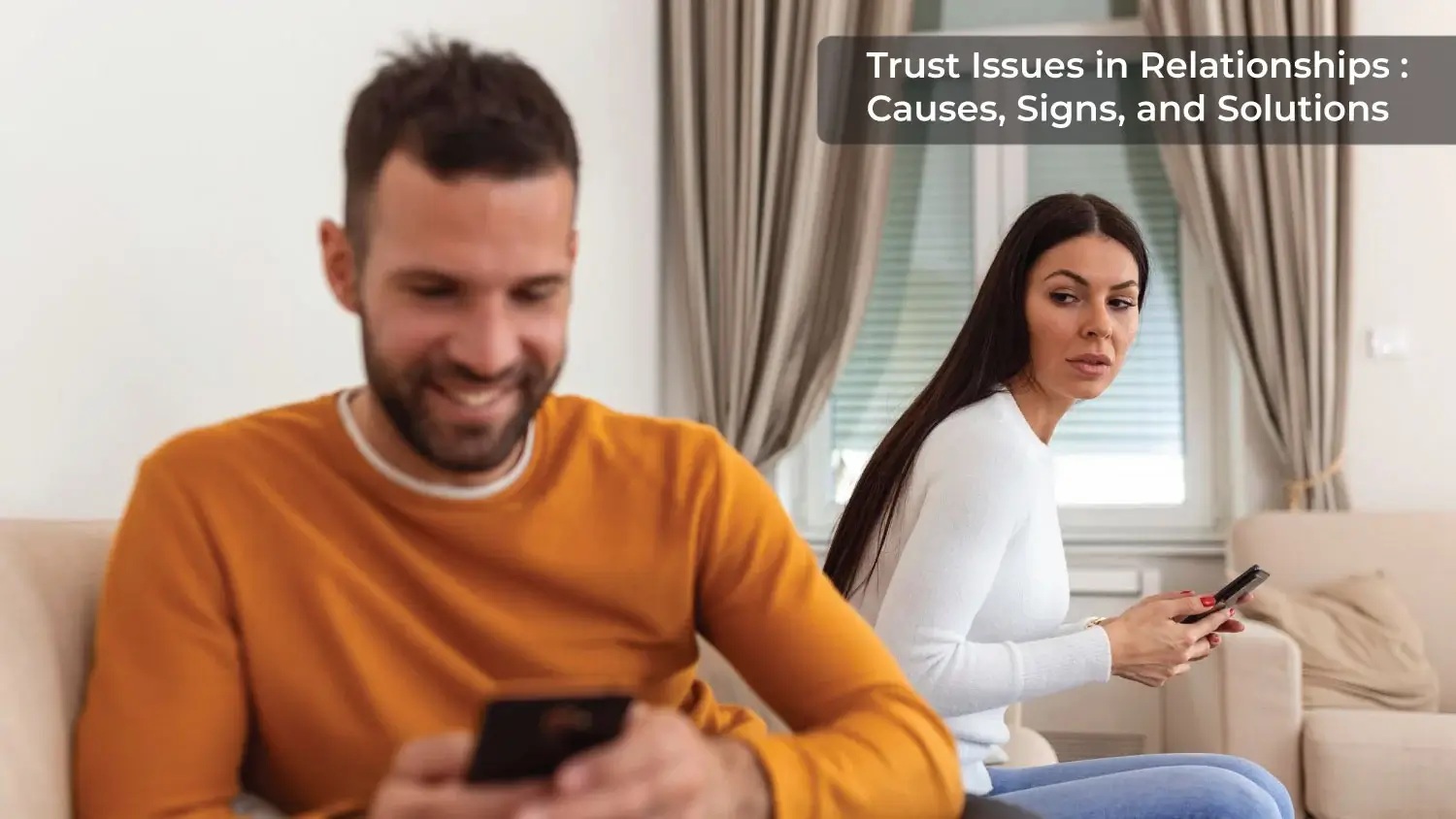
Questioning where your partner is, who they’re texting, or why they’re late-even without evidence.
Fear of Vulnerability
Avoiding deep conversations or emotional intimacy to prevent getting hurt.
Overthinking and Anxiety
Reading into small actions or changes in tone and assuming the worst.
Emotional Distance
Pulling away emotionally, becoming less affectionate, or avoiding serious commitment.
Control and Monitoring
Checking phones, social media accounts, or demanding constant updates.
These behaviors don’t come from cruelty-they often come from fear.
How Trust Issues Affect Relationships
Unchecked trust issues can slowly damage even the strongest connection.
They can lead to:
- Frequent arguments
- Emotional exhaustion
- Loss of intimacy
- Resentment
- Self-doubt in both partners
Over time, the relationship may feel more like a battlefield than a safe space.
Solutions: How to Overcome Trust Issues
The good news? Trust can be rebuilt-if both partners are willing to try.
1. Practice Honest Communication
Talk openly about your fears, triggers, and expectations.
Instead of saying:
“You always lie to me.”
Try:
“I feel anxious when I don’t understand what’s happening.”
This shifts blame into understanding.
2. Set Healthy Boundaries
Trust doesn’t mean unlimited access to each other’s lives. It means respecting privacy while remaining emotionally transparent.
Examples of boundaries:
- Personal time
- Private conversations with friends
- Financial independence
Boundaries create security, not distance.
3. Rebuild Through Consistency
Trust grows from repeated actions, not promises.
Small habits matter:
- Keeping your word
- Showing up on time
- Being emotionally present
- Apologizing sincerely
Consistency slowly replaces doubt with confidence.
4. Heal Past Trauma
Sometimes the pain isn’t from your current partner-but from your past.
Journaling, self-reflection, or therapy can help you separate old wounds from present reality.
5. Seek Professional Support
Couples therapy or relationship counseling can provide a safe space to rebuild understanding and communication.
Seeking help is not weakness-it’s emotional maturity.
Ever-Evolving Relationship Tips to Build Lasting Trust
Relationships change as people grow. Trust must evolve too.
Here are modern, practical habits that strengthen emotional security:
- Weekly emotional check-ins: Ask how your partner is really feeling.
- Digital honesty: Be transparent about online boundaries and social media interactions.
- Emotional validation: You don’t have to agree-just understand.
- Respect independence: Love grows stronger when both partners maintain their identity.
- Celebrate effort, not perfection: Progress matters more than flawlessness.
These evolving habits reflect how modern relationships thrive in a fast-paced, connected world.
When to Walk Away vs. When to Work It Out
Not every relationship can-or should-be saved.
Consider working it out if:
- Both partners accept responsibility
- Communication is improving
- Actions match words
- There is emotional respect
Consider walking away if:
- There is repeated betrayal
- Emotional or physical abuse exists
- Your mental health is suffering
- Trust is continuously broken
Choosing peace over pain is not failure-it’s self-respect.
Final Thoughts
Trust issues do not define you. They reveal where healing is needed.
With patience, self-awareness, and consistent effort, it is possible to build a relationship where love feels safe again. Whether you are repairing a broken bond or learning to trust for the first time, remember that growth is always possible.
At Heart Talks Today, we believe real relationships are not perfect-but they are honest, evolving, and deeply human.
FAQs
Can trust issues ever fully go away?
They can improve significantly, but healing is gradual. With consistent effort, trust can become stronger than before.
Is it normal to have trust issues after being cheated on?
Yes. It’s a natural emotional response. Healing requires time, self-compassion, and honest communication.
Can a relationship survive without trust?
Not in a healthy way. Love without trust often leads to anxiety, control, and emotional pain.
Should I check my partner’s phone if I feel insecure?
It’s better to talk openly. Secretly checking devices often damages trust further.
How long does it take to rebuild trust?
It varies. Some couples take months, others years. What matters is consistency and emotional honesty.